
Can Invisalign Fix More Than Crooked Teeth?
Why Patients Think Invisalign Is Only Cosmetic
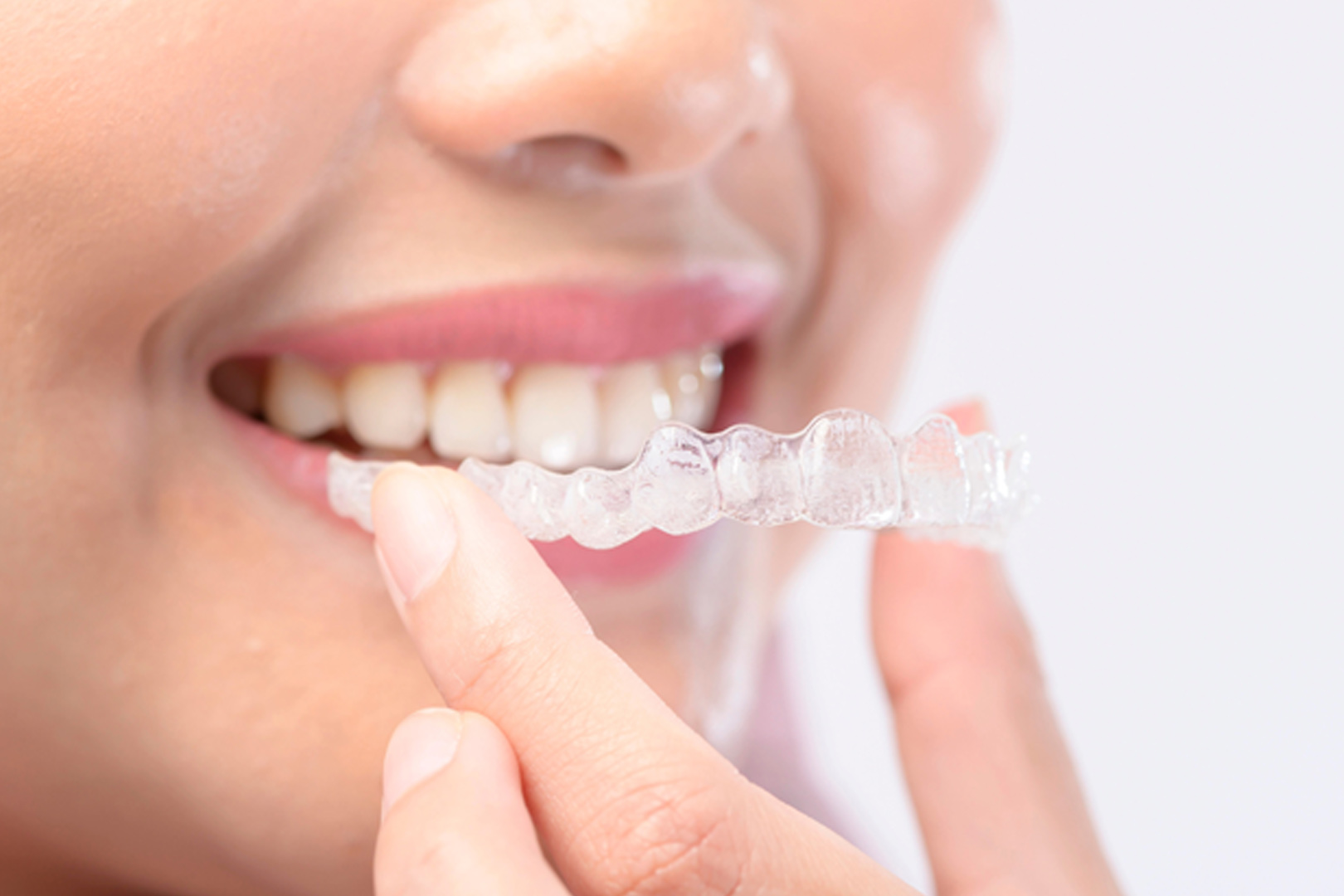
When most people think of Invisalign, they imagine a series of clear trays designed to straighten a few front teeth. It has built a reputation as the discreet, nearly invisible alternative to metal braces, perfect for professionals or anyone who wants to avoid “metal mouth.” Because these clear aligners are so subtle, there is a common assumption that they are strictly cosmetic, a way to fix a minor snaggletooth or a slightly tilted incisor before a big event.
However, viewing this treatment as just a beauty upgrade misses the bigger picture. Teeth and jaw alignment are deeply connected to how your mouth functions. While a straighter smile looks great, the real value often lies in how teeth straightening improves your bite and long-term dental health. With adult orthodontic treatment becoming more popular than ever, many patients are discovering that these aligners do much more than just “prettify” a smile.
What Invisalign Is Designed to Do
To understand the scope of what these aligners can handle, it helps to look at how they work. When looking at Invisalign vs traditional braces for full dental alignment, unlike traditional braces that use wires to pull teeth, Invisalign uses medical-grade plastic trays to push them. Each tray in your series is shaped slightly differently, applying specific pressure to certain teeth at specific times.
This is a staged process. Every two weeks or so, you move to a new set of aligners. This gradual movement is mapped out through digital imaging at the start of your journey. Because of this digital mapping, a Santa Monica dentist can see exactly how your teeth should move before you even put in your first tray. This makes the process a form of orthodontic care, rather than a simple cosmetic fix. It is a systematic way to move the roots and crowns of your teeth into a healthy position.
Bite Issues Invisalign Can Help Correct
One of the most frequent questions patients ask is: Can Invisalign fix crooked teeth and bite issues at the same time? The answer is often yes. While crookedness is what we see in the mirror, the bite, how your upper and lower teeth meet, is what matters for your daily comfort.
Invisalign for overbite, underbite, and crowded teeth has become a standard approach in modern dentistry. Here are a few specific issues it can address:
- Overbite: When the upper teeth overlap the lower teeth too much.
- Underbite: When the lower teeth sit in front of the upper teeth.
- Crossbite: When some upper teeth sit inside the lower teeth rather than outside.
- Open Bite: When the top and bottom teeth don’t touch when the mouth is closed.
How Invisalign corrects gaps and misaligned bites involves more than just the trays themselves. Sometimes, small tooth-colored bumps called attachments are placed on the teeth to give the aligners more grip, allowing them to shift the jaw position or rotate stubborn teeth. When your bite is aligned, chewing becomes easier, and you reduce the strain on your facial muscles.
Invisalign and Jaw Pain, TMJ, and Clenching
There is a strong relationship between how your teeth sit and how your jaw feels. If your teeth are misaligned, your jaw has to work harder to find a resting position or to chew food. This uneven pressure can lead to jaw strain, headaches, and even clenching or grinding at night.
By using clear aligners to balance the bite, many patients find that their jaw tension decreases. When the pressure is distributed evenly across all teeth, the joints in the jaw don’t have to compensate for a crooked bite.
It is important to note that while smile alignment can help with symptoms of TMJ disorders caused by bite issues, it isn’t a cure-all for every jaw problem. A proper diagnosis is needed to see if the pain is coming from the teeth or the joint itself.
Invisalign for Crowding, Spacing, and Shifting Teeth
Invisalign for uneven teeth and dental crowding is perhaps its most well-known use. Crowding happens when there simply isn’t enough room in the jaw for all your teeth to fit normally. They might overlap, twist, or get pushed to the front or back.
On the flip side, some people deal with large gaps. How Invisalign improves jaw alignment and teeth spacing involves closing those gaps to prevent food from getting stuck and to keep the teeth from tilting into empty spaces.
This is especially relevant for adults who had braces as teenagers but didn’t wear their retainers. Teeth have a memory and love to shift back to their original spots. Teeth straightening later in life can catch this shifting before it leads to more serious problems, such as bone loss or tooth wear.
How Invisalign Can Support Long-Term Oral Health
A straight smile is a healthy smile for reasons that have nothing to do with looks. When teeth are crowded or overlapping, they create hiding spots for plaque and bacteria. No matter how much you brush, it is hard to reach every nook and cranny of a rotated tooth.
By achieving bite correction and proper spacing, you make brushing and flossing much more productive. Aligned teeth also wear down more evenly. When teeth are crooked, they often hit each other at odd angles, leading to chipped edges and thinning enamel. Straightening them preserves your natural tooth structure for the long haul.
Invisalign and Speech, Chewing, and Function
We don’t often think about the mechanics of speaking, but the tongue needs to hit specific parts of the teeth to create sounds like “s,” “t,” and “th.” Severe misalignment can cause a lisp or other speech patterns that feel off. Similarly, if your teeth don’t meet correctly, chewing certain foods can be a chore.
Improving smile alignment helps restore mouth function. When the teeth are where they belong, your tongue has the space it needs, and your bite force is distributed so eating is comfortable and quiet.
What Invisalign Cannot Fix Alone
While clear aligners are powerful, they have limits. They are fantastic for most dental movements, but some situations require a different approach.
- Skeletal Issues: If the jawbone itself is too wide, narrow, or protruding, aligners might not be enough to fix the profile. Surgery or traditional braces might be needed.
- Severe Rotations: Teeth that need to turn more than 20 degrees can be difficult for plastic trays to grab.
- Large Gaps: While they close gaps well, extremely large spaces might require a combination of treatments.
- Tooth Shape: Aligners move teeth, but they don’t change the size or color. For that, you might look into veneers or bonding.
Invisalign as Part of a Comprehensive Treatment Plan
Many people visit a Santa Monica dentist for Invisalign and cosmetic teeth correction as part of a larger makeover. Sometimes, straightening the teeth is just the first phase.
For example, if you want veneers but your teeth are very crowded, a dentist might suggest a short course of Invisalign first. This puts the teeth in the right spot so that less of the natural tooth has to be removed for the veneer. It serves as a building block for crowns, implants, or whitening, ensuring the final result is stable and natural.
Who Is a Good Candidate for Invisalign Beyond Crooked Teeth?
If you have mild to moderate bite issues or if you’ve noticed your teeth shifting as you age, you are likely a great candidate. The best way to know is through a digital evaluation. Modern scanners can produce a 3D model of your mouth and simulate how your teeth will look after treatment. This takes the guesswork out of the process and helps you see how the bite correction will actually happen.
Also Read: Best Dentist Near Me in Santa Monica, CA
Conclusion: So, Can Invisalign Fix More Than Crooked Teeth?
The answer is a resounding yes. While the cosmetic perks are the most visible benefit, the functional improvements, better chewing, easier cleaning, and a balanced bite, are what truly make the treatment worth it. Invisalign is a sophisticated orthodontic tool that handles everything from simple gaps to complex overlaps and bite mismatches.
If you are tired of dealing with jaw tension, or if you’ve noticed your teeth are harder to keep clean, it might be time to look past the surface. A straight smile is beautiful, but a functional, healthy bite is what keeps you smiling for a lifetime.
Request an appointment with Santa Monica Dental Studio today!