
Dental Exam & Cleaning in Santa Monica
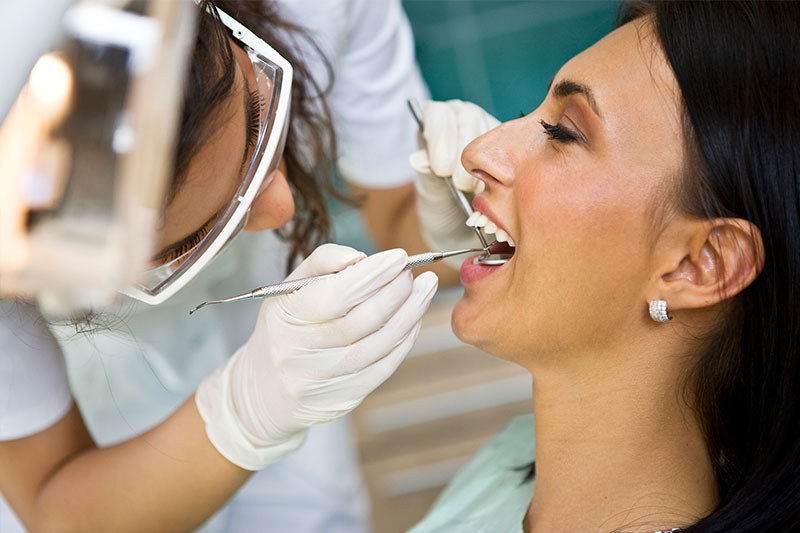
Regular dental cleanings and exams are vital to maintaining your oral health and preventing future complications.
Dental Cleanings
The American Dental Association (ADA) recommends that patients visit a dentist twice every year. Most insurances will cover two visits as a result of this recommendation. This is because traditional brushing methods are unable to remove tartar, though plaque prevention is still possible.
A dental cleaning will remove bacteria, tartar buildup, and plaque from the surface of your teeth. This is vital to ensure that your teeth stay in great health. In addition, your dental cleaning includes a polish using a cleaner guaranteed to give your teeth a nice shine!
Give Us A Call
If you want to learn more about our dental cleaning procedure or if you have any other questions or concerns, then please call our office at 310-453-4488 and one of our receptionists will assist you.
Frequently Asked Questions
1. What is included in a dental exam and cleaning?
A comprehensive dental exam includes a visual inspection of your teeth and gums, digital X-rays as needed, oral cancer screening, and a review of your dental and medical history. The cleaning — performed by a dental hygienist — involves removing plaque and tartar buildup, polishing the teeth, and flossing.
2. How often should I get a dental exam and cleaning?
For most patients, every six months is ideal. Patients with a history of gum disease, a higher risk of cavities, or certain systemic health conditions may benefit from more frequent visits, such as every three to four months. Dr. Sadat will recommend the right schedule for you.
3. Does a dental cleaning hurt?
Routine cleanings are generally comfortable. If you have significant tartar buildup or sensitive gums, there may be some mild discomfort during scaling. Let your hygienist know if you are experiencing sensitivity — they can adjust their technique and take breaks as needed.
4. Why do I need X-rays at my dental appointment?
X-rays allow us to see areas that cannot be detected with a visual exam alone — including cavities between teeth, bone loss, infections, and the position of developing teeth. They are an essential diagnostic tool, and we take them only as often as clinically necessary.
5. What is the difference between a regular cleaning and a deep cleaning?
A regular (prophylaxis) cleaning removes plaque and tartar above and just below the gumline — it is a preventive maintenance procedure for patients with healthy gums. A deep cleaning (scaling and root planing) removes buildup from below the gumline and smooths root surfaces to treat gum disease.
6. How long does an exam and cleaning appointment take?
A typical exam and cleaning takes about sixty minutes. If it is your first visit, or if additional X-rays or a more thorough evaluation is needed, the appointment may run slightly longer.
7. What is plaque and why is it important to remove it?
Plaque is a sticky film of bacteria that constantly forms on teeth. If not removed through daily brushing and flossing, it hardens into tartar, which can only be removed by a dental professional. Left untreated, plaque and tartar lead to cavities and gum disease.
8. What is tartar (calculus) and how does it form?
Tartar, also called calculus, is hardened plaque. When plaque is not removed within about twenty-four to seventy-two hours, minerals from saliva cause it to calcify and harden onto the tooth surface. Once tartar has formed, it cannot be brushed away and requires professional removal.
9. What happens if I skip my dental cleanings?
Skipping cleanings allows tartar to build up, increasing the risk of cavities and gum disease. Gum disease can progress silently and, if left untreated, lead to bone loss and tooth loss. Regular cleanings also allow us to detect and address problems early, saving you time, discomfort, and expense.
10. Is an oral cancer screening really necessary?
Yes. Oral cancer is highly treatable when caught early, but survival rates drop significantly with late-stage diagnosis. The screening is a quick and painless part of your routine exam and could be life-saving. Certain factors — including tobacco use, heavy alcohol consumption, and HPV — increase risk.
11. Why do my gums bleed when I get a cleaning?
Bleeding gums during a cleaning are typically a sign of inflammation caused by plaque or tartar buildup — not a sign that the hygienist is being too rough. Consistent brushing, flossing, and regular professional cleanings usually resolve gum bleeding over time.
12. Can I eat before my dental appointment?
Yes, you can eat before a cleaning. We do ask that you brush your teeth before your appointment if possible. Avoid very sticky or hard foods right beforehand, and feel free to rinse your mouth with water before you arrive.
13. Will the dentist check my gums as well as my teeth?
Yes. Gum health is a central part of every exam. We measure the depth of the pockets between your teeth and gums — measurements of three millimeters or less are generally healthy. Deeper pockets may indicate gum disease that requires further treatment.
14. What should I tell my dentist at my exam?
Let Dr. Sadat know about any changes to your health or medications since your last visit, any new symptoms such as tooth pain or sensitivity, concerns about your smile, and your home care routine. The more we know, the better we can tailor your care.
15. How can I make the most of my dental exam visit?
Arrive a few minutes early, bring your insurance card, and come prepared with any questions or concerns. Brush and floss before your appointment. If you have not been to the dentist in a while, don't be embarrassed — we are here to help, not to judge. Starting is the most important step.